
 Image 1 of 1
Bach Flower non alcoholic Base - create your own
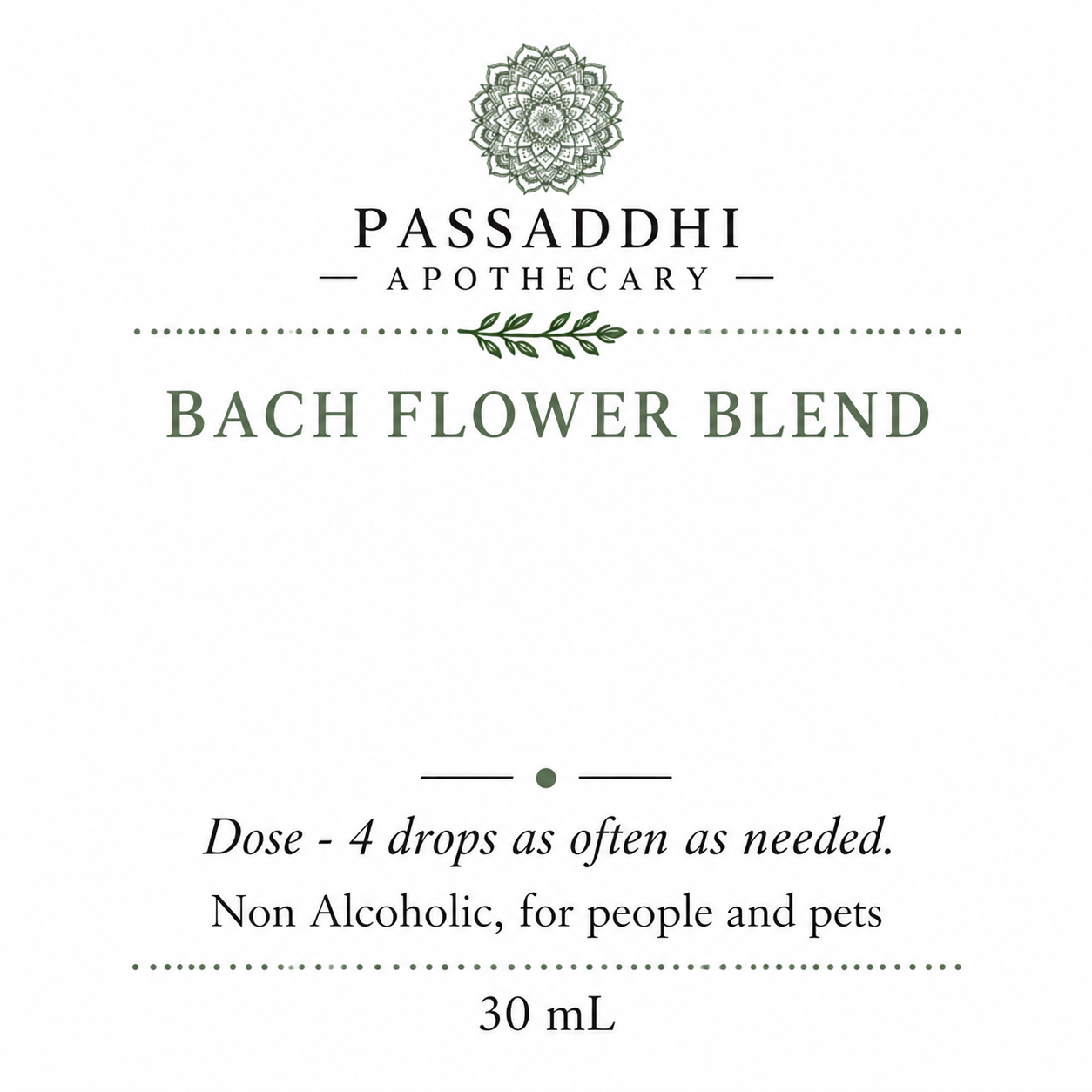
Create your own personalised Bach Flower blend, choosing the remedies that best suit your animal’s individual emotional needs. Select up to 7 Bach Flower remedies from our Bach Flower Guide and enter the names of your chosen flowers in the box provided when ordering. Your blend will be individually prepared in a gentle non-alcoholic base, making it suitable for dogs and cats. Dose: 4 drops as often as needed, given directly, added to food or placed in drinking water.
Bach Flower Guide for Animals
Every animal is different. Use this guide to help identify the Bach Flowers that most closely match the behaviours and emotions you are noticing in your pet. You can choose up to 7 remedies for your personalised blend.
FEAR & ANXIETY
For animals showing fear, nervousness, apprehension or panic.
Aspen — Nervous, watchful or fearful for no obvious reason; unexplained apprehension.
Cherry Plum — Highly wound-up, frantic or appearing close to losing control.
Mimulus — Fear of a known trigger, such as thunderstorms, fireworks, travel, the vet, a particular person, animal or place.
Red Chestnut — Overly anxious or protective about a particular person or another animal.
Rock Rose — Extreme fear, terror or panic; may freeze, bolt, tremble or become frantic.
UNCERTAINTY & LACK OF CONFIDENCE
For animals that appear hesitant, discouraged, inconsistent or lacking confidence.
Cerato — Appears unsure and repeatedly looks to their person for reassurance.
Gentian — Easily discouraged following a setback and reluctant to try again.
Gorse — Appears to have given up or lost hope following prolonged difficulty.
Hornbeam — Reluctant to get started or participate, although often improves once underway.
Scleranthus — Fluctuates between behaviours or choices and has difficulty settling on one response.
Wild Oat — Restless or unsettled without a clear routine, role or appropriate outlet.
LACK OF INTEREST & WITHDRAWAL
For animals that appear disengaged, exhausted, withdrawn or less interested in their surroundings.
Chestnut Bud — Repeatedly makes the same behavioural mistakes and seems slow to learn from experience.
Clematis — Dreamy, withdrawn, inattentive or disengaged from their surroundings.
Honeysuckle — Has difficulty moving forward following loss, separation, rehoming or significant change.
Mustard — Sudden periods of low mood or withdrawal without an obvious reason.
Olive — Exhausted following prolonged stress, illness or exertion.
White Chestnut — Cannot seem to switch off or settle; repetitive or restless behaviour.
Wild Rose — Apathetic, resigned or uninterested in activities they would normally engage with.
LONELINESS & NEED FOR CONNECTION
For animals struggling with being alone or relating comfortably to others.
Heather — Constantly seeks company or attention and finds being alone difficult.
Impatiens — Restless, impatient, easily irritated and quick to react.
Water Violet — Aloof, independent or withdrawn and tends to keep their distance from others.
SENSITIVITY TO CHANGE & OUTSIDE INFLUENCES
For sensitive animals or those experiencing changes in their environment or routine.
Agrimony — Appears outwardly settled or cheerful while showing subtle signs of underlying distress or restlessness.
Centaury — Very submissive, easily dominated or has difficulty standing their ground with other animals.
Holly — Jealous, suspicious, angry or reactive towards other animals or people.
Walnut — Sensitive to change and transitions, such as moving house, a new baby or pet, rehoming, travel or changes in routine.
DESPONDENCY, DISTRESS & RECOVERY
For animals affected by difficult experiences, loss of confidence, shock or prolonged emotional strain.
Crab Apple — Excessive grooming or licking, or particularly sensitive to feeling dirty or uncomfortable.
Elm — Normally capable but temporarily appears overwhelmed by circumstances.
Larch — Timid or lacking confidence; reluctant to try unfamiliar things or situations.
Oak — Keeps pushing on despite tiredness, illness or strain and finds it difficult to rest.
Pine — Very submissive or appeasing following correction and may behave as though expecting to be told off.
Star of Bethlehem — For emotional support following shock, fright, trauma, bereavement, accident or surgery.
Sweet Chestnut — Profound distress; appears to have reached the limit of their ability to cope.
Willow — Irritable, sulky or resentful following an unwanted change, restriction or disruption.
STRONG-WILLED, CONTROLLING & OVER-CONCERNED
For animals whose behaviours or personalities can be particularly intense, rigid or demanding.
Beech — Irritable or intolerant of other animals, people or situations.
Chicory — Clingy, possessive, demanding of attention or jealous when others receive attention.
Rock Water — Very rigid about habits or routines and finds changes difficult.
Vervain — Over-excitable, intense or driven and has difficulty switching off and relaxing.
Vine — Dominant, controlling, pushy or forceful with other animals or people.
Choosing Your Blend
Choose the remedies that most closely reflect the behaviours you are currently seeing in your animal. More than one Bach Flower can be selected when several different behaviours or emotional patterns are present.
Select up to 7 Bach Flowers, then enter the names of your chosen remedies in the selection box when ordering.
Not sure which flowers to choose? You don't need to find a perfect match. Focus on what you are actually observing in your animal and select the descriptions that seem most relevant to them at the moment.
Bach Flower remedies provide gentle emotional support and are not a substitute for veterinary care. New, severe or persistent behavioural changes should be assessed by your veterinarian.
Create your own personalised Bach Flower blend, choosing the remedies that best suit your animal’s individual emotional needs. Select up to 7 Bach Flower remedies from our Bach Flower Guide and enter the names of your chosen flowers in the box provided when ordering. Your blend will be individually prepared in a gentle non-alcoholic base, making it suitable for dogs and cats. Dose: 4 drops as often as needed, given directly, added to food or placed in drinking water.
Bach Flower Guide for Animals
Every animal is different. Use this guide to help identify the Bach Flowers that most closely match the behaviours and emotions you are noticing in your pet. You can choose up to 7 remedies for your personalised blend.
FEAR & ANXIETY
For animals showing fear, nervousness, apprehension or panic.
Aspen — Nervous, watchful or fearful for no obvious reason; unexplained apprehension.
Cherry Plum — Highly wound-up, frantic or appearing close to losing control.
Mimulus — Fear of a known trigger, such as thunderstorms, fireworks, travel, the vet, a particular person, animal or place.
Red Chestnut — Overly anxious or protective about a particular person or another animal.
Rock Rose — Extreme fear, terror or panic; may freeze, bolt, tremble or become frantic.
UNCERTAINTY & LACK OF CONFIDENCE
For animals that appear hesitant, discouraged, inconsistent or lacking confidence.
Cerato — Appears unsure and repeatedly looks to their person for reassurance.
Gentian — Easily discouraged following a setback and reluctant to try again.
Gorse — Appears to have given up or lost hope following prolonged difficulty.
Hornbeam — Reluctant to get started or participate, although often improves once underway.
Scleranthus — Fluctuates between behaviours or choices and has difficulty settling on one response.
Wild Oat — Restless or unsettled without a clear routine, role or appropriate outlet.
LACK OF INTEREST & WITHDRAWAL
For animals that appear disengaged, exhausted, withdrawn or less interested in their surroundings.
Chestnut Bud — Repeatedly makes the same behavioural mistakes and seems slow to learn from experience.
Clematis — Dreamy, withdrawn, inattentive or disengaged from their surroundings.
Honeysuckle — Has difficulty moving forward following loss, separation, rehoming or significant change.
Mustard — Sudden periods of low mood or withdrawal without an obvious reason.
Olive — Exhausted following prolonged stress, illness or exertion.
White Chestnut — Cannot seem to switch off or settle; repetitive or restless behaviour.
Wild Rose — Apathetic, resigned or uninterested in activities they would normally engage with.
LONELINESS & NEED FOR CONNECTION
For animals struggling with being alone or relating comfortably to others.
Heather — Constantly seeks company or attention and finds being alone difficult.
Impatiens — Restless, impatient, easily irritated and quick to react.
Water Violet — Aloof, independent or withdrawn and tends to keep their distance from others.
SENSITIVITY TO CHANGE & OUTSIDE INFLUENCES
For sensitive animals or those experiencing changes in their environment or routine.
Agrimony — Appears outwardly settled or cheerful while showing subtle signs of underlying distress or restlessness.
Centaury — Very submissive, easily dominated or has difficulty standing their ground with other animals.
Holly — Jealous, suspicious, angry or reactive towards other animals or people.
Walnut — Sensitive to change and transitions, such as moving house, a new baby or pet, rehoming, travel or changes in routine.
DESPONDENCY, DISTRESS & RECOVERY
For animals affected by difficult experiences, loss of confidence, shock or prolonged emotional strain.
Crab Apple — Excessive grooming or licking, or particularly sensitive to feeling dirty or uncomfortable.
Elm — Normally capable but temporarily appears overwhelmed by circumstances.
Larch — Timid or lacking confidence; reluctant to try unfamiliar things or situations.
Oak — Keeps pushing on despite tiredness, illness or strain and finds it difficult to rest.
Pine — Very submissive or appeasing following correction and may behave as though expecting to be told off.
Star of Bethlehem — For emotional support following shock, fright, trauma, bereavement, accident or surgery.
Sweet Chestnut — Profound distress; appears to have reached the limit of their ability to cope.
Willow — Irritable, sulky or resentful following an unwanted change, restriction or disruption.
STRONG-WILLED, CONTROLLING & OVER-CONCERNED
For animals whose behaviours or personalities can be particularly intense, rigid or demanding.
Beech — Irritable or intolerant of other animals, people or situations.
Chicory — Clingy, possessive, demanding of attention or jealous when others receive attention.
Rock Water — Very rigid about habits or routines and finds changes difficult.
Vervain — Over-excitable, intense or driven and has difficulty switching off and relaxing.
Vine — Dominant, controlling, pushy or forceful with other animals or people.
Choosing Your Blend
Choose the remedies that most closely reflect the behaviours you are currently seeing in your animal. More than one Bach Flower can be selected when several different behaviours or emotional patterns are present.
Select up to 7 Bach Flowers, then enter the names of your chosen remedies in the selection box when ordering.
Not sure which flowers to choose? You don't need to find a perfect match. Focus on what you are actually observing in your animal and select the descriptions that seem most relevant to them at the moment.
Bach Flower remedies provide gentle emotional support and are not a substitute for veterinary care. New, severe or persistent behavioural changes should be assessed by your veterinarian.